FPV Drone Steals the Show at Austrian Grand Prix: Formula 1's New Broadcast Camera

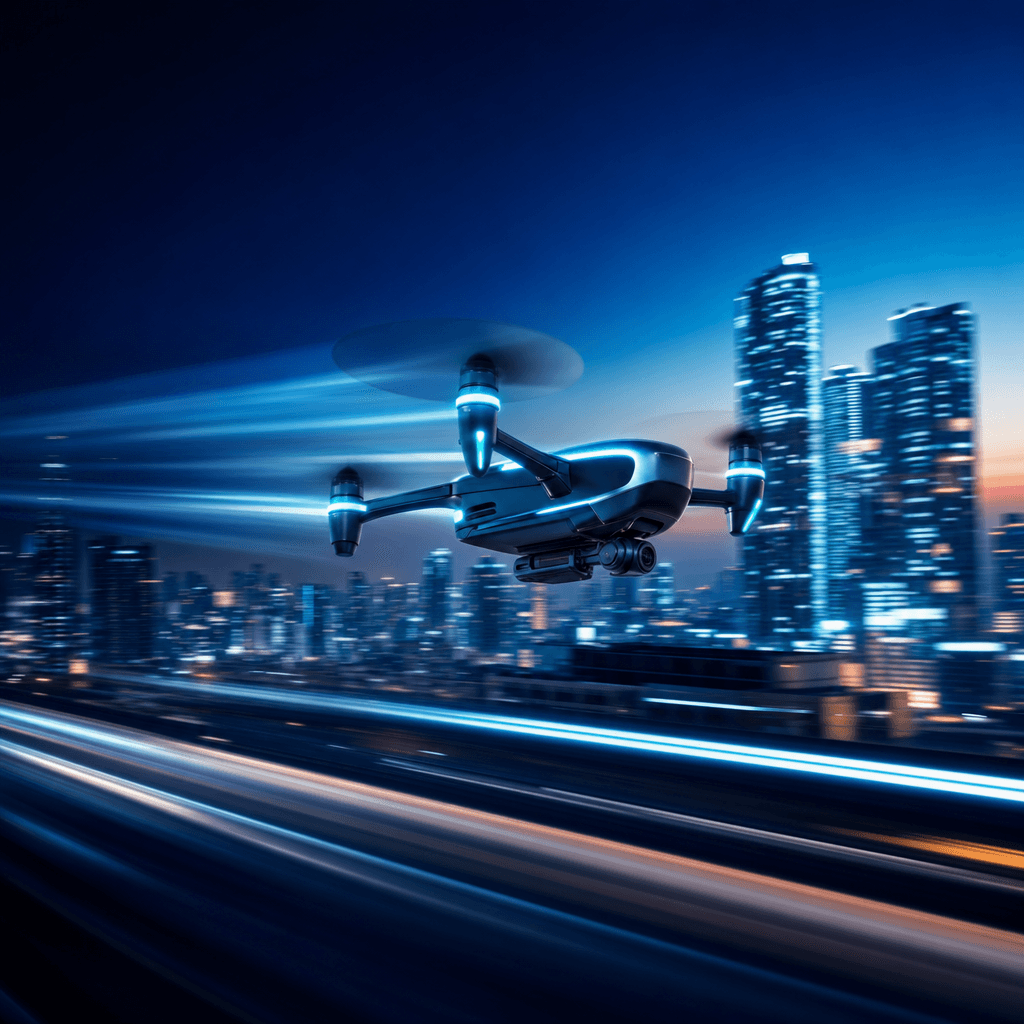
On June 28, 2026, at the Austrian Grand Prix at the Red Bull Ring, Formula 1 used FPV drone footage as a primary broadcast camera for the first time, rather than as a side feature. The much-talked-about sequence captured the battle between Lewis Hamilton in the Ferrari and Max Verstappen in the Red Bull around the 11th kilometer of the race, and aired live on Apple TV, Formula 1's exclusive US broadcast partner for the 2026 season.
A drone diving over the cars at breakneck speed
The Spielberg circuit is known for its hilly layout, with sharp climbs and descents that make any aerial filming attempt especially challenging. This time, the camera wasn't static on a crane or mounted on a distant helicopter. Instead, a tiny FPV drone chased the cars up close, flying almost level with their roofs, capturing the battle from an angle that had never before been possible in live sports broadcasting.
- Event date: June 28, 2026
- Circuit: Red Bull Ring, Spielberg, Austria
- Drivers in the filmed battle: Lewis Hamilton (Ferrari) vs. Max Verstappen (Red Bull)
- Race stage: around the 11th kilometer
- Reported relative speed of the drone versus the cars: over 350 km/h
- Broadcast platform: Apple TV, F1's exclusive US broadcast partner for 2026
Fans demand to know who piloted the drone
The online reaction was immediate. Within hours of the broadcast, the clip spread across social media with thousands of shares, and the most recurring question wasn't how the sequence was filmed, but who actually flew the drone. Formula 1 has yet to reveal the pilot's identity, which has only fueled curiosity around the production.
Not a first attempt, but the bar keeps rising
FPV technology already proved itself earlier this year. At the 2026 Winter Olympics, FPV drones were used to track skiers and snowboarders down the slopes, and that kind of footage was already considered an innovation in sports broadcasting. But industry experts point to a crucial difference: at the Olympics, these were occasional appearances used as visual add-ons, whereas at the Austrian Grand Prix the drone served as a primary camera angle for a dramatic moment at the heart of one of the most-watched sports broadcasts in the world.
As a result, according to industry professionals, the shift of FPV from occasional use in highlight reels to a standard tool in major live productions has already begun. What remains an open question is purely operational: how many such FPV drones are needed to cover an entire race, what it costs to employ professional pilots capable of safely tracking cars traveling at speeds over 300 km/h, and how European regulators are handling flight permissions for such operations over massive crowds at an active racetrack.
Isradrone Editorial Team
The Isradrone team covers drone technology, defense, mapping, agriculture and logistics innovation from around the world. Original, research-based reporting verified for the Israeli market.
Related Stories

XAG Unveils Self-Charging, Self-Refilling Agricultural Drone System
Chinese firm XAG has unveiled a new agricultural spraying system in which the drone recharges itself and refills pesticide with no human involvement, a response to new Chinese regulations that burden heavier drones.

CHCNAV Unveils LiDAR Sensor That Scans Mountains From 2,100 Meters Away
CHC Navigation has introduced the AlphaAir 6, an airborne LiDAR sensor built for survey drones operating in mountainous terrain, offering a scanning range of up to 2,100 meters and flight altitudes far above the industry norm.

DJI's Surprise: Not a New Drone, But a Rescue Parachute for the Matrice 400
A week of speculation about a Matrice 30 successor ended with a far more modest product: an emergency parachute system built for the Matrice 400. The choice may hide a regulatory calculation as weighty as any engineering one.

Skydio and EVERYWHERE Launch Autonomous Drone the Instant a Lone Worker Hits SOS
EVERYWHERE Communications and Skydio have announced an integration that instantly dispatches an autonomous drone to a lone worker who triggers an SOS alert, with the capability now being tested in a real-world pilot program.