DJI Breaks Into FPV: Meet the New DJI FPV Drone

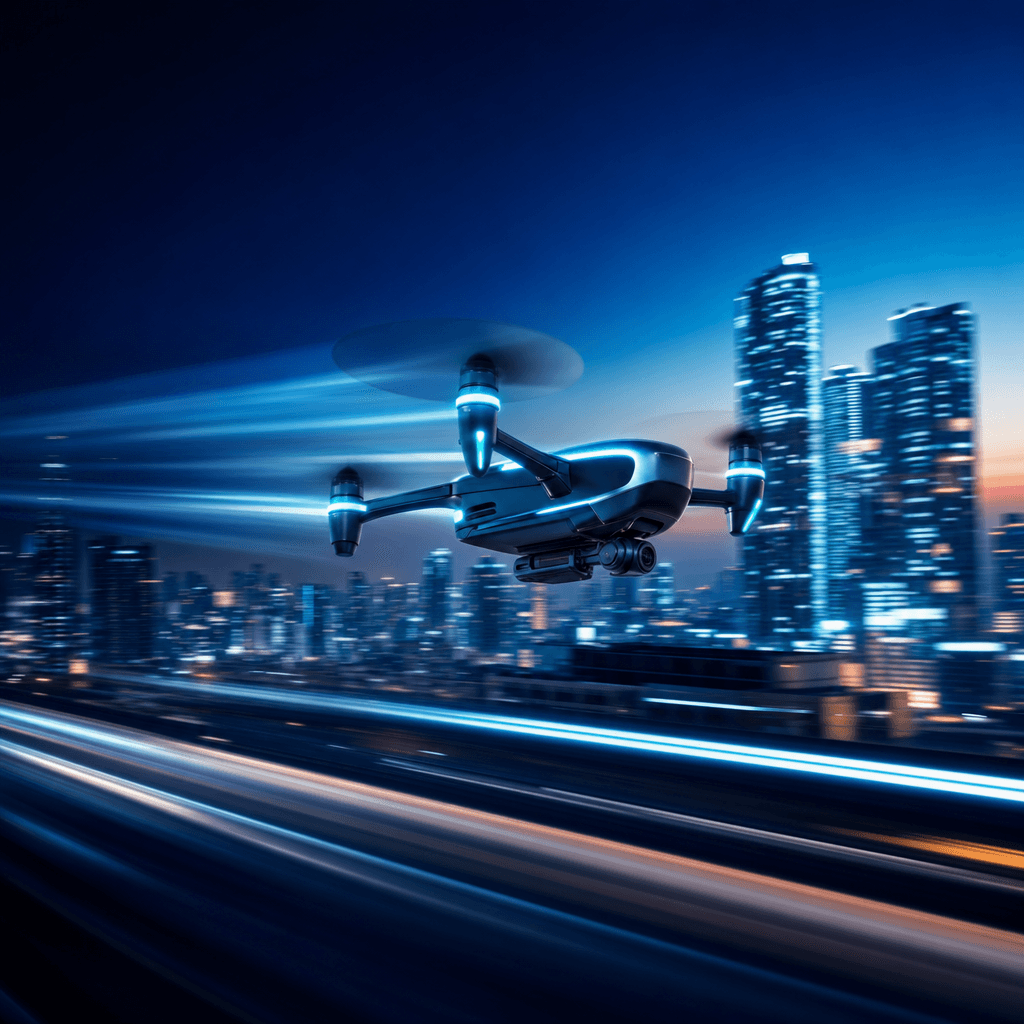
DJI announced today, March 2, 2021, the DJI FPV, its first drone designed specifically for FPV (First Person View) flying, a space that until now has been dominated mainly by homebuilt racing drones. The drone reaches a top speed of 140 km/h, accelerates from 0 to 100 km/h in about two seconds, and shoots 4K video at 60 frames per second.
The FPV world has lived on the margins of the drone industry until now. It's a community of hobbyists who assembled their own racing drones, soldered components, tuned analog video receivers, and trained for long hours before managing to fly without crashing. DJI, which built its empire on approachable camera drones like the Mavic and Phantom series, is now trying to take that same accessible approach and apply it to a field that has so far demanded exceptionally high manual skill.
Specs that speak the language of racing
The numbers DJI chose to highlight at launch aren't aimed at the average hobbyist photographer, but at an audience raised on FPV racing that wants speed and acceleration. At the same time, the company made sure to include camera capabilities that let the drone double as a filmmaking tool, not just a racing machine.
- Top speed: 140 km/h
- Acceleration: 0 to 100 km/h in about two seconds
- Video resolution: 4K at 60 frames per second
- Field of view: 150 degrees (Super-Wide)
- Image stabilization: RockSteady
A 10-kilometer transmission range and 28-millisecond latency
The O3 transmission system, the third generation of DJI's OcuSync technology, handles the connection between the drone, the pilot's goggles, and the remote control. In FPV flying, every millisecond of lag between what the camera sees and what the pilot sees in the goggles can end in a crash, which is why DJI is focusing on this figure right from launch.
- Control range: up to 10 kilometers
- Video latency: just 28 milliseconds
Three flight modes for three skill levels
For DJI, the main obstacle facing the FPV industry isn't performance, it's the barrier to entry. Full manual flight requires months of practice, and most potential customers simply give up before they even start. The DJI FPV comes with three flight modes designed to solve exactly that.
- Normal mode: built for beginners, offering simplified and safer control
- Sport mode: full manual control, aimed at experienced FPV pilots
- Motion Controller mode: control via hand movements instead of the two classic control sticks
The Motion Controller option is arguably DJI's most interesting bet with this product. Instead of teaching new users to operate two sticks simultaneously, as is standard on classic racing drones, DJI offers more intuitive control through hand gestures. The open question is whether the experienced FPV community, which prides itself on manual skill, will embrace a tool explicitly designed to lower the entry barrier, or dismiss it as a toy rather than a serious tool.
An off-the-shelf product versus DIY culture
Until now, anyone who wanted to fly FPV at a competitive level had to build the drone themselves: frame, motors, flight controller, analog FPV camera, and transmitter, each purchased separately. The DJI FPV arrives packaged off the shelf, with goggles, controller, and drone that already talk to each other from the first moment. That's exactly the formula that made the Mavic DJI's most popular consumer camera drone, and now the company is trying to replicate that recipe in the racing arena. It remains to be seen whether this market, small and niche compared to aerial photography, will respond to the plug-and-play approach with the same enthusiasm.
Isradrone Editorial Team
The Isradrone team covers drone technology, defense, mapping, agriculture and logistics innovation from around the world. Original, research-based reporting verified for the Israeli market.
Related Stories

XAG Unveils Self-Charging, Self-Refilling Agricultural Drone System
Chinese firm XAG has unveiled a new agricultural spraying system in which the drone recharges itself and refills pesticide with no human involvement, a response to new Chinese regulations that burden heavier drones.

CHCNAV Unveils LiDAR Sensor That Scans Mountains From 2,100 Meters Away
CHC Navigation has introduced the AlphaAir 6, an airborne LiDAR sensor built for survey drones operating in mountainous terrain, offering a scanning range of up to 2,100 meters and flight altitudes far above the industry norm.

DJI's Surprise: Not a New Drone, But a Rescue Parachute for the Matrice 400
A week of speculation about a Matrice 30 successor ended with a far more modest product: an emergency parachute system built for the Matrice 400. The choice may hide a regulatory calculation as weighty as any engineering one.

Skydio and EVERYWHERE Launch Autonomous Drone the Instant a Lone Worker Hits SOS
EVERYWHERE Communications and Skydio have announced an integration that instantly dispatches an autonomous drone to a lone worker who triggers an SOS alert, with the capability now being tested in a real-world pilot program.